
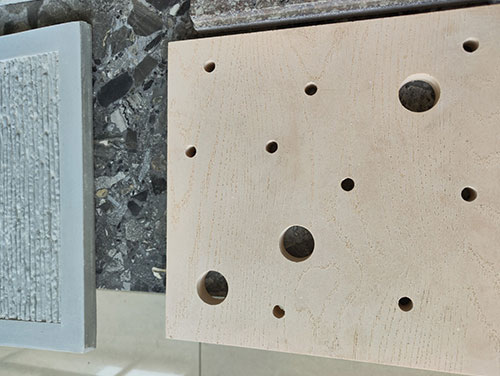
High-Quality GRC Panels for Premium Projects
Industry Background and Market Demand
Glass Fiber Reinforced Concrete (GRC) panels have become a preferred material in high-end architectural and construction projects due to their versatility, durability, and aesthetic flexibility. The global demand for premium building materials has surged, driven by urbanization, sustainability requirements, and the need for lightweight yet strong facades. GRC panels are increasingly specified for projects where precision, longevity, and design intricacy are non-negotiable—such as corporate headquarters, luxury residential developments, and cultural landmarks.
Unlike traditional concrete, GRC incorporates alkali-resistant glass fibers, enabling thinner cross-sections without compromising structural integrity. This makes it ideal for complex geometries, reducing dead load on buildings while maintaining high-performance standards.
Core Concepts and Key Technologies
GRC is a composite material consisting of:
- Cementitious Matrix: High-performance cement with low-alkali content to prevent fiber degradation.
- Glass Fibers: Dispersed evenly to enhance tensile strength and crack resistance.
- Polymer Additives: Improve workability, water resistance, and curing efficiency.
The manufacturing process involves spray-up or premix techniques, with the former ensuring higher fiber alignment for superior mechanical properties. Advanced production methods, such as robotic spraying, enable consistent thickness and density—critical for large-scale projects.
Product Structure and Performance
High-quality GRC panels are engineered to meet specific performance criteria:
- Strength-to-Weight Ratio: Achieves 20–30 MPa flexural strength at just 15–25 mm thickness.
- Durability: Resists freeze-thaw cycles, UV radiation, and chemical exposure.
- Fire Resistance: Non-combustible, complying with A1 fire safety ratings.
- Aesthetic Customization: Can replicate natural stone, metal, or wood finishes.
The material’s performance hinges on:
1. Fiber Content (4–6% by weight): Excessive fibers reduce workability; insufficient fibers weaken the composite.
2. Curing Conditions: Steam curing accelerates strength development without shrinkage cracks.
3. Surface Sealants: Acrylic or silicone coatings enhance weather resistance.
Critical Factors Influencing Quality
Several variables determine GRC panel quality:
- Raw Material Purity: Impurities in sand or cement weaken the matrix.
- Fiber Dispersion: Poor mixing causes fiber clumping, creating weak spots.
- Production Environment: Dust or humidity fluctuations affect curing.
- Quality Control: Third-party testing for flexural strength, density, and water absorption is essential.
Supplier Selection Criteria
For premium projects, suppliers must demonstrate:
- Certifications: ISO 9001, EN 1169, and CE marking.
- Technical Expertise: Ability to produce custom molds and finishes.
- Project Portfolio: Proven experience in high-specification applications.
- Supply Chain Transparency: Traceability of raw materials and ethical sourcing.
Common Challenges and Industry Pain Points
1. Delamination: Poor bonding between layers due to improper curing or adhesive failure.
2. Surface Defects: Air bubbles or uneven textures from suboptimal spraying techniques.
3. Cost Misalignment: Low-cost suppliers often compromise on fiber quality or curing processes.
4. Installation Complexity: Requires skilled labor to handle precise tolerances.
Applications and Case Studies
1. Luxury Facades
A landmark hotel in Dubai used ultra-thin GRC panels (12 mm) to mimic intricate Islamic geometric patterns, reducing structural load by 40% compared to stone cladding.
2. Sustainable Retrofits
A historic building in London integrated GRC panels for façade restoration, matching original limestone aesthetics while improving thermal performance.
3. Modular Construction
A German prefab housing developer adopted GRC for modular bathroom pods, leveraging its moldability and water resistance.
Trends and Future Outlook
1. Digital Fabrication: AI-driven mold design and 3D-printed GRC components are gaining traction.
2. Carbon-Neutral GRC: Research into low-carbon cements and recycled glass fibers.
3. Integrated Smart Features: GRC with embedded sensors for structural health monitoring.
FAQ
Q: How does GRC compare to traditional precast concrete?
A: GRC offers superior tensile strength, lighter weight, and greater design flexibility but may have higher initial costs.
Q: What is the typical lifespan of GRC panels?
A: Properly manufactured and installed GRC lasts 50+ years with minimal maintenance.
Q: Can GRC be used in seismic zones?
A: Yes, its high ductility and crack resistance make it suitable for earthquake-prone regions.
In summary, high-quality GRC panels are a strategic choice for premium projects demanding innovation, durability, and design excellence. As technology advances, GRC will continue redefining architectural possibilities while addressing sustainability challenges.
Ce site Web utilise des cookies pour vous garantir la meilleure expérience sur notre site Web.

 English
 Español
 Portugues
 Pусский
 Deutsch
 日本語
日本語 한국어
한국어 العربية
 Italiano
 Polski
 Türk dili
 Melayu
 中文
中文 қазақ
қазақ עִברִית
 українська
 norsk
norsk o'zbek
 ଓଡିଆ
ଓଡିଆ



 Téléphone
Commentaire
(0)